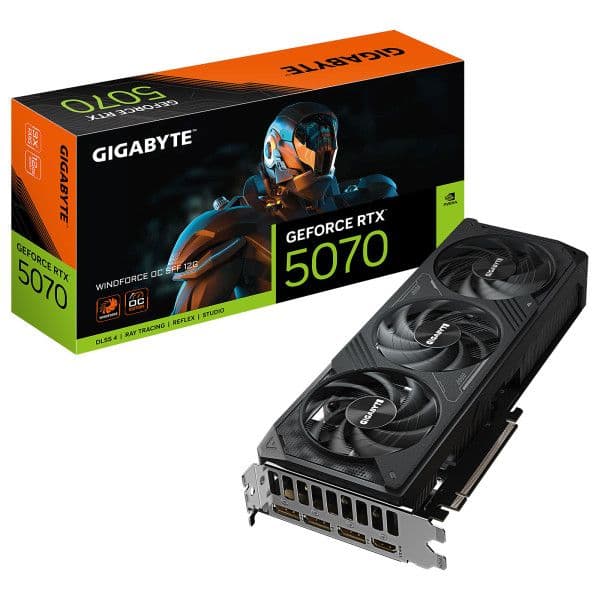
-1 950 MADOccasion
1 / 6
ZOTACNeuf scellé
ZOTAC Gaming GeForce RTX 4070 Super Trinity Black Edion DLSS 3 12GB GDDR6X
8 490,00 MAD8 999,00 MAD
Économisez 509 MADPaiement à la livraison (espèces) ou par virement bancaire sécurisé.
Zotac ZT-D40720E-10M carte graphique NVIDIA GeForce RTX 4070 SUPER 12 Go GDDR6X
Rupture de stockGarantie 12 mois
Commander sur WhatsApp
Magasin Casablanca : Sur commande · Disponible sous 48h

Livraison Maroc : 24h à 48h express à domicile avec suivi.

Garantie constructeur : 12 mois · Matériel 100% neuf officiel.

Tests en atelier : Composants vérifiés et prêts à l'emploi.
Description du produit
Zotac GeForce RTX 4070 SUPER Trinity Black is a mid-range custom design for the GeForce RTX 4070 Super. NVIDIA today gave its RTX 40-series a mid lifecycle refresh with the new RTX 40 SUPER series. This brings you more performance, and hence more value, at existing price points. The new RTX 4070 SUPER we’re reviewing today displaces the RTX 4070 from its official RTX 4070 MSRP, which now starts at $550. Zotac is going beyond what the MSRP cards offer, with their Trinity Black triple-fan cooling solution. The GPU itself is not overclocked, which should prove beneficial for temperatures and fan noise. NVIDIA is recommending the new RTX 4070 SUPER for the same gaming scenario as the other RTX 4070 series cards—maxed out AAA gaming at 1440p with ray tracing enabled; although our testing over the months have consistently shown even the older RTX 4070 to be capable of 4K Ultra HD gameplay. You could turn the eye-candy just a touch down, or take advantage of the DLSS feature, including the newer DLSS 3 Frame Generation, which is now supported across an impressive number of AAA and e-sports titles.
NVIDIA designed the RTX 4070 SUPER to be closer in performance to the RTX 4070 Ti than it is further from the original RTX 4070. This is done by increasing the shader counts by a neat 21%, enabling the full 48 MB L3 cache, as well as all of the 80 ROPs on the 5 nm AD104 silicon that the RTX 4070 series was based on; which means the RTX 4070 SUPER enables 93% of the available shaders, in contrast to the RTX 4070, which only has 76% of them. The RTX 4070 Ti maxes this chip out, but is being retired by NVIDIA, and replaced by the new RTX 4070 Ti SUPER, which will come out next week.
The Ada Lovelace graphics architecture takes advantage of the 5 nm EUV foundry node, and new on-silicon technologies, to generationally increase performance over the RTX 30-series Ampere. The new Ada CUDA core, besides IPC uplifts, supports the new shader execution reordering feature, which should benefit ray tracing workloads. The new 3rd generation RT core, besides increased ray intersection performance, supports displaced micro-meshes, which should increase the complexity of ray traced objects. The new optical flow accelerator component is what allows the GPU to draw alternate frames entirely using AI, which is what powers DLSS 3 Frame Generation.
NVIDIA carved the RTX 4070 SUPER out of the AD104 by enabling 56 out of 60 SM available on the silicon, working out to 7,168 CUDA cores, 224 Tensor cores, 56 RT cores, and 224 TMUs. The card gets the full 48 MB of L2 cache available on the silicon, as well as all 80 ROPs, which should significantly improve the memory sub-system, as well as raster performance. The memory itself, however, is unchanged from the RTX 4070 Ti and RTX 4070—you get 12 GB of 21 Gbps GDDR6X memory across a 192-bit memory bus, yielding 504 GB/s of bandwidth. This may seem low, but this is where the large on-die L2 cache steps in, to compensate for the bandwidth shortfall. 12 GB is still a generational gain in memory size over even the previous generation RTX 3080.
Zotac RTX 4070 SUPER Trinity Black comes with the new IceStorm 2.0 cooling solution, which is a large triple-slot cooler that uses a heavy dual fin-stack heatsink that’s ventilated by three fans. The GPU, however, sticks to NVIDIA reference clock speeds of 2475 MHz boost, and 21 Gbps GDDR6X-effective memory, the company has priced the card at $650. Compared to the RTX 4070, NVIDIA has increased the TGP power limit by 10% to drive all those extra shaders, which means that the single 8-pin PCIe you found on some of the MSRP RTX 4070 cards now makes way for a full 12VHPWR connector. An adapter cable is included.
Short 10-Minute Video Comparing 8x RTX 4070 Super
Our goal with the videos is to create short summaries, not go into all the details and test results, which can be found in our written reviews.
NVIDIA GeForce RTX 4070 Super Market Segment Analysis
Price
Cores
ROPs
Core
Clock
Boost
Clock
Memory
Clock
GPU
Transistors
Memory
RTX 4060 Ti
$390
4352
48
2310 MHz
2535 MHz
2250 MHz
AD106
22900M
8 GB, GDDR6, 128-bit
RX 6700 XT
$300
2560
64
2424 MHz
2581 MHz
2000 MHz
Navi 22
17200M
12 GB, GDDR6, 192-bit
RTX 3070
$310
5888
96
1500 MHz
1725 MHz
1750 MHz
GA104
17400M
8 GB, GDDR6, 256-bit
RTX 3070 Ti
$350
6144
96
1575 MHz
1770 MHz
1188 MHz
GA104
17400M
8 GB, GDDR6X, 256-bit
RX 6800
$450
3840
96
1815 MHz
2105 MHz
2000 MHz
Navi 21
26800M
16 GB, GDDR6, 256-bit
RX 7700 XT
$430
3456
96
2171 MHz
2544 MHz
2250 MHz
Navi 32
26500M
12 GB, GDDR6, 192-bit
RX 6800 XT
$500
4608
128
2015 MHz
2250 MHz
2000 MHz
Navi 21
26800M
16 GB, GDDR6, 256-bit
RTX 3080
$450
8704
96
1440 MHz
1710 MHz
1188 MHz
GA102
28000M
10 GB, GDDR6X, 320-bit
RTX 4070
$540
5888
64
1920 MHz
2475 MHz
1313 MHz
AD104
35800M
12 GB, GDDR6X, 192-bit
RX 7800 XT
$510
3840
96
2124 MHz
2430 MHz
2425 MHz
Navi 32
28100M
16 GB, GDDR6, 256-bit
RX 6900 XT
$650
5120
128
2015 MHz
2250 MHz
2000 MHz
Navi 21
26800M
16 GB, GDDR6, 256-bit
RX 6950 XT
$630
5120
128
2100 MHz
2310 MHz
2250 MHz
Navi 21
26800M
16 GB, GDDR6, 256-bit
RTX 3090
$800
10496
112
1395 MHz
1695 MHz
1219 MHz
GA102
28000M
24 GB, GDDR6X, 384-bit
RTX 4070 Super
$600
7168
80
1980 MHz
2475 MHz
1313 MHz
AD104
35800M
12 GB, GDDR6X, 192-bit
Zotac RTX 4070 Super
Trinity
$650
7168
80
1980 MHz
2475 MHz
1313 MHz
AD104
35800M
12 GB, GDDR6X, 192-bit
RTX 4070 Ti
$750
7680
80
2310 MHz
2610 MHz
1313 MHz
AD104
35800M
12 GB, GDDR6X, 192-bit
RTX 4070 Ti Super
$800
8448
112
2340 MHz
2610 MHz
1400 MHz
AD103
45900M
16 GB, GDDR6X, 256-bit
RX 7900 XT
$760
5376
192
2000 MHz
2400 MHz
2500 MHz
Navi 31
57700M
20 GB, GDDR6, 320-bit
RTX 3090 Ti
$1050
10752
112
1560 MHz
1950 MHz
1313 MHz
GA102
28000M
24 GB, GDDR6X, 384-bit
RTX 4080
$1200
9728
112
2205 MHz
2505 MHz
1400 MHz
AD103
45900M
16 GB, GDDR6X, 256-bit
RTX 4080 Super
$1000
10240
112
2295 MHz
2550 MHz
1400 MHz
AD103
45900M
16 GB, GDDR6X, 256-bit
Dans la même catégorie
Tout voir
-600 MADOccasion
-3 000 MADOccasion
-891 MAD
-850 MAD
-309 MAD
-300 MAD
-500 MAD
-1 500 MAD
-300 MAD